
Easy Spaghetti Garlic Bread Bowls
We had half a box of dried pasta, a jar of marinara, and a loaf of Italian bread that was starting to lose its softness. Usually, I’d just toast the bread on the side, but the kids have been asking for something different lately. I remembered seeing the idea of hollowed-out bread bowls used for soup and wondered if the same logic would hold up for a heavy pasta dish.
The goal wasn’t to make a gourmet meal, but rather to find a way to make basic pantry staples feel a little more intentional. I wanted the bread to act as both the vessel and the side dish, soaking up the sauce without turning into a soggy mess before it hit the table.
Choosing the Bread and the Sauce
The choice of bread is probably the most important part of this working. I used a standard loaf of Italian bread from the grocery store bakery—the kind that’s about twelve inches long and relatively wide. I considered using a baguette, but the diameter is too narrow; you’d barely get two bites of spaghetti in there. A sourdough boule would work well too, but for a weeknight, the softer Italian loaf is easier to hollow out without tearing the crust.
For the filling, I stuck with a basic meatless marinara. I thought about adding ground beef or turkey, but since the bread is so filling, a heavy meat sauce felt like overkill. Instead, I focused on the “garlic bread” aspect of the bowl. I used unsalted butter so I could control the saltiness, mixing it with plenty of grated garlic and a pinch of dried oregano. I found that using fresh garlic here is better than powder because it toasts against the bread in the oven, giving it that distinct pungently sweet flavor you get at a pizza shop.
What Happened in the Kitchen
I started by getting the pasta water going. While waiting for the boil, I prepped the bread. I cut the loaf into three chunky sections, each about four inches long. To turn them into bowls, I used a paring knife to cut a circle into the top of each piece, leaving about a half-inch border around the edge.
The tricky part is pulling out the “innards” of the bread without punching a hole through the bottom. I used my fingers to gently tug the soft white bread out. I saved the bready bits in a bowl; throwing them away felt wasteful, and they ended up being great for dipping into the extra sauce later.
Once the bread was hollowed out, I smeared the garlic butter inside. I was generous with it, especially at the bottom. I realized quickly that if the bottom isn’t well-buttered, the sauce from the spaghetti just makes the crust wet rather than crisp. I put the empty, buttered bread shells into the oven at 375°F for about five minutes. This “pre-toast” is a step I’m glad I didn’t skip. It creates a slight barrier that keeps the bread structurally sound once the heavy pasta is added.
Meanwhile, the spaghetti finished. I cooked it about a minute less than the package directions—true al dente. Since the pasta goes back into the oven inside the bread, it continues to soften. If you start with fully soft noodles, they turn to mush by the time the cheese is melted. I tossed the noodles with just enough sauce to coat them; you don’t want a pool of liquid at the bottom of the bowl.
Watching the Details
The assembly is where things can get a bit messy. I used a pair of tongs to swirl the spaghetti into the toasted bread shells. I had to pack it in a bit more firmly than I expected. If the pasta is too loose, the bowl feels empty.
I noticed during the second bake that the tops of the bread were browning much faster than the cheese was melting. I had to move the baking sheet to a lower rack to keep the edges from burning. I also realized that a thick layer of shredded mozzarella on top acts as a lid, steaming the pasta underneath while it bakes.
If you’re making this, keep an eye on the garlic. If it’s sliced too thick, it won’t mellow out in the short baking time and might stay a bit sharp. Grating it on a microplane or mincing it very fine worked best for getting that integrated flavor. Also, make sure your baking sheet is lined with parchment or a silicone mat. A little cheese always escapes down the side, and it’s a pain to scrub off a bare pan.
Serving and Leftovers
I served these on individual plates because, frankly, they are a bit of a project to eat. My youngest decided to eat the pasta out of the middle first and then eat the “walls” of the bowl, while the rest of us just cut into it with a serrated knife like a loaf of bread.
The texture was interesting—the outside of the bread stayed crunchy, while the inside, where the butter and sauce met, was soft and chewy. We didn’t really need any side dishes because the bread-to-pasta ratio is quite high.
As for leftovers, I had one bowl left over. I was skeptical about how it would reheat. I put it in the toaster oven at 325°F for about ten minutes the next day. The microwave would have turned the bread into a rubbery sponge, but the oven did a decent job of reviving the crunch. It wasn’t as good as it was fresh out of the oven, but it was a solid lunch.
Final Thoughts
This isn’t a meal I’d make every week, mostly because it’s quite heavy on the carbohydrates, but it was a fun way to use up a loaf of bread that was on its last legs. It’s a good Friday night meal when everyone is tired and wants something comforting that feels a little more special than a standard bowl of noodles. It’s best for families with kids or for a casual dinner with friends where you don’t mind getting a few crumbs on the table.
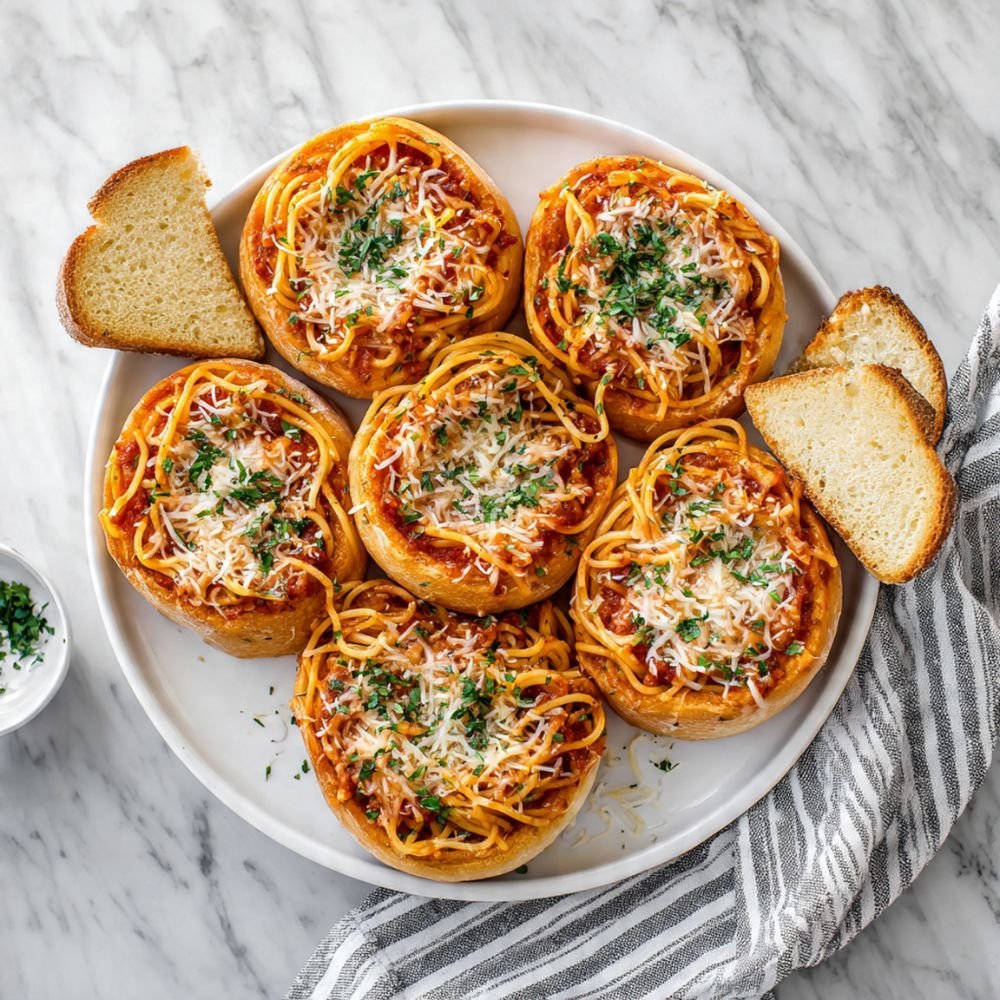
Spaghetti Garlic Bread Bowls
A fun and delicious twist on classic spaghetti! Tender spaghetti with rich marinara sauce served in crispy, buttery garlic bread bowls. This creative dish combines two favorites into one impressive meal that’s perfect for family dinners or entertaining.
shopping_basket Ingredients
- 4 large sourdough bread bowls (or round bread loaves)
- 12 oz spaghetti
- 2 cups marinara sauce (homemade or store-bought)
- ½ cup unsalted butter, softened
- 4 cloves garlic, minced
- 2 tbsp fresh parsley, chopped
- ¼ cup grated Parmesan cheese
- ½ tsp Italian seasoning
- ½ tsp salt (or to taste)
- ¼ tsp black pepper
- 1 tbsp olive oil
- ¼ tsp red pepper flakes (optional)
- Fresh basil leaves for garnish
- Additional Parmesan cheese for serving
list Instructions
- Prepare Bread Bowls: Preheat oven to 375°F (190°C). Cut the tops off each bread bowl and carefully hollow out the center, leaving about ½-inch thick walls. Reserve the bread tops.
- Make Garlic Butter: In a small bowl, mix softened butter, minced garlic, parsley, Italian seasoning, salt, and black pepper until well combined.
- Season Bread Bowls: Spread the garlic butter mixture generously inside each bread bowl and on the cut-off tops. Place bread bowls and tops on a baking sheet lined with parchment paper.
- Bake Bread Bowls: Bake for 10-12 minutes until golden brown and crispy. Remove from oven and set aside.
- Cook Spaghetti: While bread bowls bake, cook spaghetti in a large pot of salted boiling water according to package directions until al dente. Drain well.
- Prepare Sauce: In a large skillet, heat olive oil over medium heat. Add marinara sauce and red pepper flakes (if using). Simmer for 5-7 minutes until slightly thickened.
- Combine Pasta: Add drained spaghetti to the sauce and toss to coat evenly. Stir in ¼ cup Parmesan cheese until melted and combined.
- Assemble: Place baked bread bowls on serving plates. Fill each bread bowl with spaghetti mixture. Sprinkle with additional Parmesan cheese if desired.
- Serve: Garnish with fresh basil leaves. Serve immediately with the crispy bread tops on the side for dipping or crumbling into the pasta.
monitor_heart Nutrition Information
Per Serving (1 bread bowl)
lightbulb Success Tips & Variations
- Choose the right bread: Sourdough or artisan bread bowls work best as they hold their shape well during baking. Avoid bread that’s too soft or fluffy.
- Don’t over-hollow: Leave at least ½-inch thick walls when hollowing out bread bowls. Too thin and they may collapse; too thick and they won’t crisp properly.
- Customize your sauce: Add browned ground beef, Italian sausage, or sautéed mushrooms to the marinara sauce for extra protein and flavor.
- Cheese lovers: Add shredded mozzarella or provolone to the spaghetti before filling the bread bowls for a cheesy, melty interior.
- Make ahead option: Prepare the garlic butter mixture and hollow out bread bowls up to 4 hours in advance. Store separately in the refrigerator.
- Use the bread scraps: Save the hollowed-out bread to make breadcrumbs, croutons, or bread pudding. Toast them with olive oil and herbs for homemade croutons.
package Storage & Reheating
Storage: This dish is best served immediately. If you have leftovers, store spaghetti and bread bowls separately in airtight containers in the refrigerator for up to 2 days.
Reheating: Reheat spaghetti in a skillet over medium heat with a splash of water or broth. Toast bread bowls in a 350°F oven for 5-7 minutes to restore crispiness before filling.
Freezing: Not recommended as the bread bowls become soggy when thawed. However, you can freeze the spaghetti sauce separately for up to 3 months.
Save or Share this Recipe
Leave feedback about this